
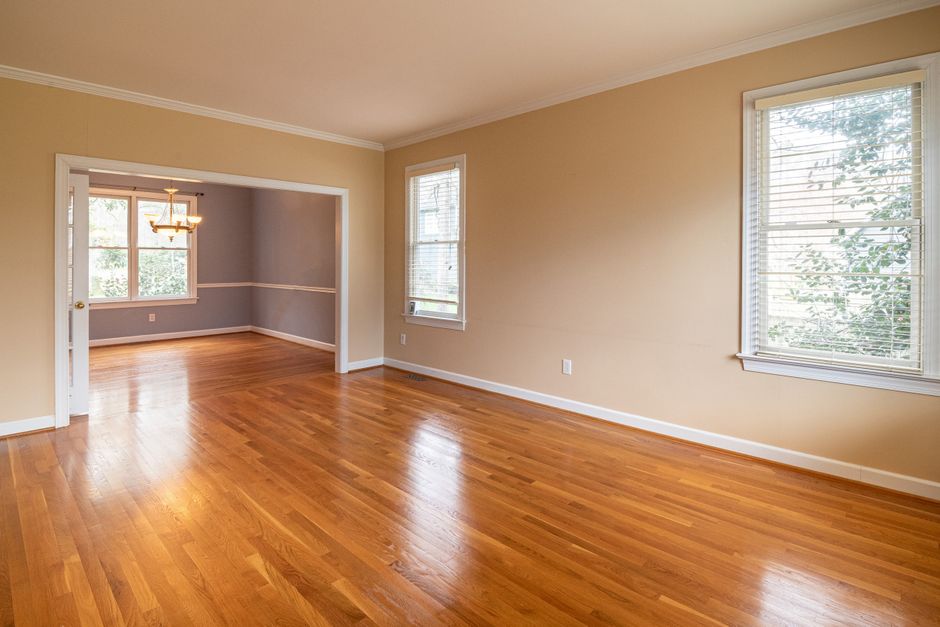
Hardwood floor refinishing typically takes 3 to 5 days for an average room, though larger homes or heavily damaged floors can stretch the project to 7 days or more. This guide covers every stage of the process, what slows things down, and what Denver-area homeowners in places like Littleton, Parker, and Highlands Ranch should plan for before the crew arrives.
Understand the Full Refinishing Timeline Day by Day
Knowing how long does hardwood floor refinishing take starts with understanding each phase. Refinishing is not a one-step job. It involves prep work, sanding, staining, and multiple finish coats, each with its own drying window.
Here is a typical day-by-day breakdown for a 300 to 500 square foot space:
| Day | Activity | Time Required |
|---|---|---|
| Day 1 | Furniture removal, prep, rough sanding | 4 to 8 hours |
| Day 2 | Fine sanding, edge work, stain application | 6 to 8 hours |
| Day 3 | First finish coat, drying time | 2 hours work, 8 hours dry |
| Day 4 | Light buff, second finish coat | 2 hours work, 8 hours dry |
| Day 5 | Final coat, light inspection | 2 to 4 hours |
| Day 6 to 7 | Full cure time before furniture returns | 24 to 72 hours |
Most crews can walk on the floor lightly after 24 hours. Full furniture replacement and normal use usually resumes after 72 hours, or up to 7 days for oil-based finishes.
Compare Oil-Based vs. Water-Based Finishes and Their Dry Times
The finish you choose is one of the biggest factors in how long your project takes. Oil-based and water-based polyurethane have very different drying windows, and both are common choices across the Denver metro area.
| Finish Type | Dry Time Per Coat | Full Cure Time | Coats Needed |
|---|---|---|---|
| Water-Based Polyurethane | 2 to 4 hours | 5 to 7 days | 3 to 4 |
| Oil-Based Polyurethane | 8 to 12 hours | 14 to 30 days | 2 to 3 |
| Hardwax Oil | 4 to 6 hours | 7 to 14 days | 2 |
| Aluminum Oxide Pre-Finish | Factory applied | Ready immediately | N/A |
Water-based finishes dry faster between coats, so the overall project can wrap up sooner. Oil-based products add amber warmth that many homeowners prefer, but they add time to the schedule.
Floors By Tomorrow recommends discussing your timeline and aesthetic goals together before choosing a finish, since both affect how long your floors are out of commission.
Identify the Factors That Extend or Shorten Your Project
Not every refinishing job follows the same schedule. Several conditions unique to your home will push the timeline in one direction or the other.
Factors that typically add time to the project:
- Deep scratches, gouges, or pet stains requiring extra sanding passes
- Old paint or wax coatings that must be stripped before sanding
- Large square footage spanning multiple rooms or stairways
- Floors with significant cupping or warping from moisture damage
- Adding a stain color, which requires extra drying time before finish coats
- High humidity days that slow finish curing
Factors that can shorten the timeline:
- Floors in good condition needing only light sanding (a screen-and-recoat, not full refinish)
- Smaller rooms or open-plan spaces with fewer edges and corners
- Choosing a fast-drying water-based finish
- Low indoor humidity, which speeds drying in Colorado’s dry climate
- An experienced crew with professional drum sanders and edgers
Colorado’s climate actually works in your favor for drying times. The naturally low humidity across cities like Lakewood, Broomfield, and Golden means finishes often cure faster here than in more humid states.
Plan for What Colorado’s Climate Does to Hardwood
Colorado homeowners deal with unique conditions that affect both the refinishing process and how your floors behave afterward. Understanding these factors helps you plan the project at the right time of year.
Colorado’s average indoor relative humidity often drops below 30 percent in winter. This low humidity causes hardwood to shrink and can create gaps between boards. If you refinish during an extremely dry period, boards may look fine during the job but show gaps later.
The ideal time to refinish in Denver, Centennial, Westminster, Thornton, and surrounding communities is late spring or early fall, when outdoor humidity is moderate and your HVAC system is not running at full capacity.
Homes in areas like Morrison, Evergreen-adjacent neighborhoods, or mountain-facing communities at higher elevation may experience more dramatic humidity swings. Floors By Tomorrow accounts for local elevation and seasonal conditions when scheduling projects across the Front Range.
Running a humidifier in the 35 to 50 percent range before and during refinishing helps the wood stabilize. Your contractor should check moisture content with a meter before sanding begins.
Know When a Screen and Recoat Is Faster Than Full Refinishing
Full refinishing involves sanding down to bare wood, which takes the most time. But many floors in good structural shape qualify for a screen and recoat instead.
A screen and recoat only scuffs the existing finish layer and applies new top coats. The process skips deep sanding entirely, which cuts the job down to 1 to 2 days total.
Your floor qualifies for a screen and recoat if:
- The finish is dull or lightly scratched but the wood is not deeply damaged
- You have never had a screen and recoat done before, or it has been 3 to 5 years since the last one
- There are no stains, pet damage, or gouges reaching the wood grain
- The existing finish is compatible with the new product your contractor will apply
If your floors only need a refresh and not a full restoration, a screen and recoat can restore the look in far less time. The trade-off is that it does not fix deep damage and does not allow for color changes.
Review Average Refinishing Timelines by Home Size
One of the most practical ways to answer how long does hardwood floor refinishing take is to match the timeline to your home’s square footage. Larger homes in Highlands Ranch, Castle Rock, Parker, and Lone Tree often have 1,000 to 2,000 square feet of hardwood or more, which adds significant time to any project.
| Home Size (Hardwood Area) | Estimated Project Length | Notes |
|---|---|---|
| Under 300 sq ft (one room) | 3 to 4 days | Standard timeline for bedrooms or small living areas |
| 300 to 700 sq ft | 4 to 5 days | Common for townhomes and condos in Denver or Englewood |
| 700 to 1,200 sq ft | 5 to 6 days | Typical for single-family homes in Lakewood or Littleton |
| 1,200 to 2,000 sq ft | 6 to 8 days | Larger homes in Castle Rock, Parker, or Highlands Ranch |
| Over 2,000 sq ft | 8 to 14 days | Custom timelines based on layout, stairs, and finish type |
Stairways add extra time because they require hand sanding and individual tread finishing. Each staircase can add a full day to the schedule.
Multiple rooms done at the same time can be more efficient since crews can work on adjacent areas while finish coats dry elsewhere. Floors By Tomorrow coordinates multi-room projects to minimize the total days your home is disrupted.
FAQs on How Long Does Hardwood Floor Refinishing Take
Can I sleep in my home while floors are being refinished?
You can usually stay in the home during sanding, but finish coats produce fumes that require ventilation. Oil-based finishes especially require you to vacate for at least 24 to 48 hours after application. Water-based finishes have lower fumes but it is still best to limit exposure.
How long after refinishing can I put furniture back?
You can walk on the floor lightly after 24 hours. Furniture should not return until 48 to 72 hours have passed. Full cure time for normal use and rugs is 7 days for water-based finishes and up to 30 days for oil-based products.
How long does refinishing take for just one room?
A single average-sized room of 150 to 250 square feet takes about 3 days. That includes one day for prep and sanding, and two days for finish coats with drying time between each coat. Smaller rooms or simple jobs may finish slightly faster.
Does adding a stain color make the project take longer?
Yes, adding a stain adds at least one full day to the project. Stain needs to dry completely before any finish coat goes down, usually 8 to 24 hours depending on the product and humidity levels in your home. Rushing this step causes finish adhesion problems.
What is the fastest way to refinish hardwood floors?
The fastest option is a screen and recoat using a water-based finish. This approach can be done in 1 to 2 days because it skips deep sanding. It only works if your floors are in good condition without deep scratches or stains reaching the wood.
How long does floor refinishing take in Colorado compared to other states?
Colorado’s low humidity actually speeds up drying times compared to humid states like Florida or Georgia. Finish coats often dry faster on the Front Range, which can shave time off the schedule. However, very dry winter conditions can cause wood to shift after the job, so timing matters.
Wrap Up and Next Steps
Most hardwood floor refinishing projects in the Denver metro area take 3 to 7 days depending on square footage, floor condition, finish type, and stain choices. Planning ahead and understanding each phase helps you minimize disruption and get the best results.
Floors By Tomorrow serves homeowners across Arvada, Centennial, Denver, Highlands Ranch, Lakewood, Thornton, Westminster, Brighton, Broomfield, Castle Pines, Castle Rock, Columbine, Commerce City, Englewood, Federal Heights, Golden, Greenwood Village, Ken Caryl, Littleton, Lone Tree, Northglenn, Parker, Sherrelwood, The Pinery, Wheat Ridge, and many more communities across the Front Range.
Ready to get your hardwood floors looking new again? Call Floors By Tomorrow at (720) 371-2000 to schedule your free estimate and get a timeline tailored to your specific home and floors.